Just Brick It!
JustBrickIt! is a modular, mortarless brick system developed from recycled textile composites to rethink affordable housing from first principles. Designed around interlocking geometry rather than chemical bonding, the system eliminates the need for mortar, reduces labor complexity, and enables rapid, scalable construction using locally sourced waste materials. By transforming textile waste into structural building components, the project reframes construction as a problem of systems design — where geometry creates stability, material comes from waste, and housing can be built faster, cheaper, and more sustainably.
Type
Year
Type
Problem
Affordable housing is constrained by material cost, supply chain dependency, and labor complexity. Traditional construction relies on cement, steel reinforcement, skilled labor, and long curing times — increasing cost, slowing deployment, and raising environmental impact. At the same time, textile waste is one of the most abundant and underutilized waste streams globally. The core question became: what if housing materials could be sourced locally from waste, and assembled without cement or steel?
Solution
Just Brick It is a modular, mortarless brick system made from recycled textile composites, built around two principles: geometry creates stability, and material comes from waste. The brick interlocks without mortar, distributes load through geometric compression, eliminates curing time, and enables manual assembly with no skilled labor required. Rather than relying on binding agents, stability is achieved through intentional ridges, cavities, and compression-based interlocking edges — transforming construction from chemical bonding to structural logic.
Design Process
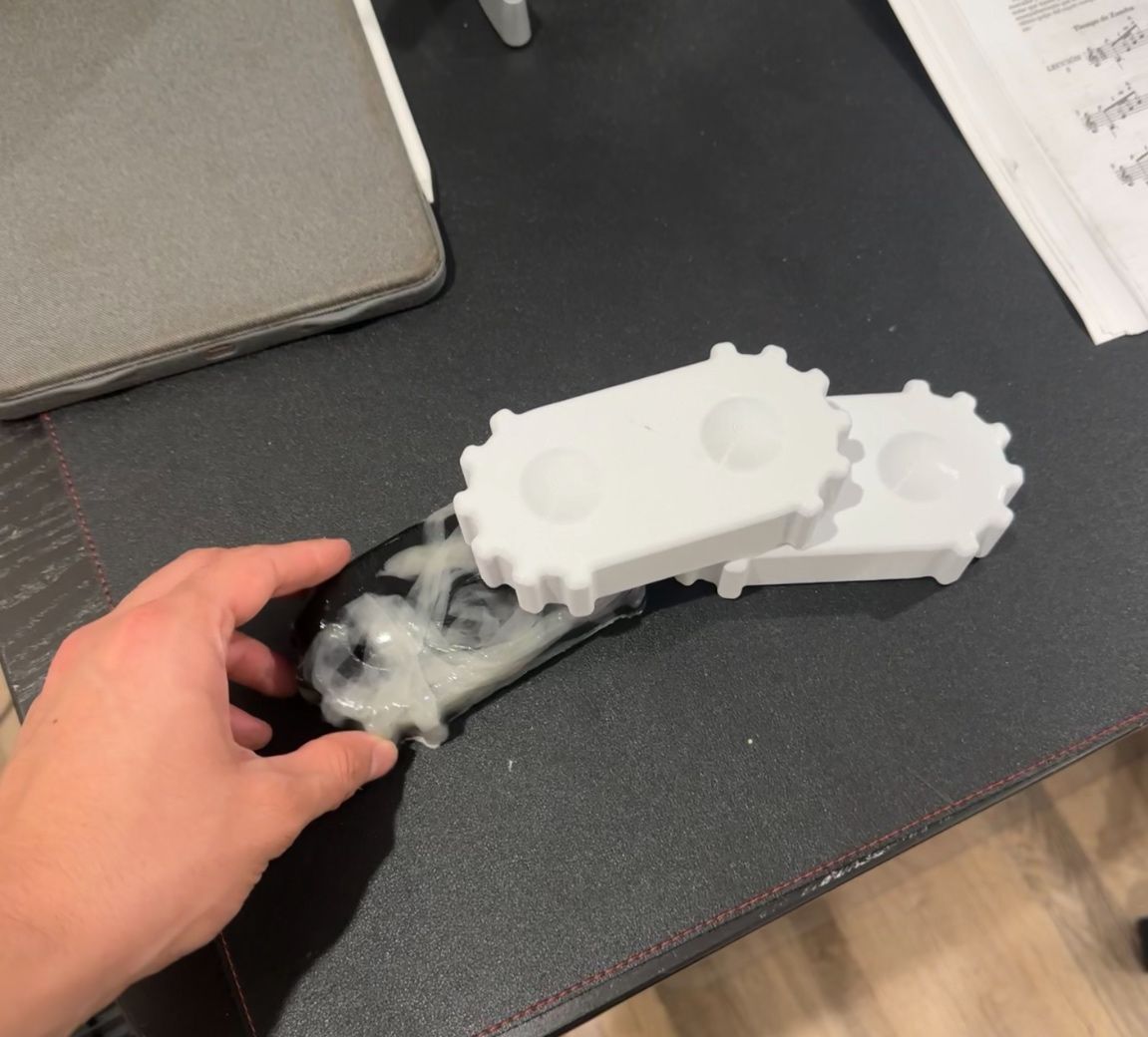
I led geometric design and prototyping, pushing the team to start with structure before material. Instead of asking what material to use, I asked what geometry makes mortar unnecessary — shifting the project from material substitution to system redesign. I 3D-modeled the interlocking brick system, prioritizing male/female edge geometry, load distribution, and stack stability. I then rapid-prototyped using a Prusa printer to test tolerances and iterate on edge geometry before moving into material testing with shredded textile fibers, bio-resin bonding agents, and compression molding.
Input
I owned product architecture, UI/UX design, API integration, and stakeholder validation end-to-end. I refined object detection thresholds, handled edge cases including food contamination and multi-material packaging, and built the location-based navigation layer. Alongside development, I led outreach to 150 students and connected with the head of USC's waste department to validate assumptions against real campus infrastructure. At the end of Origin Weekend, the team won Best Pitch Award and advanced to the Top 15 finalists.