ECO SORT
EcoSort is a technology-driven sustainability platform focused on making waste management smarter, more efficient, and more accessible. By leveraging AI and data-driven systems, EcoSort helps individuals, businesses, and communities improve recycling practices, reduce environmental impact, and promote a cleaner, more sustainable future through intelligent waste sorting and resource management solutions.
Type
Year
Type
Problem
Why does so much recyclable material still end up in landfill bins? To find out, we manually examined 25 trash and recycling bins across USC. A clear pattern emerged: students weren't indifferent — they were confused. The problem wasn't motivation, it was uncertainty. Key friction points included not knowing whether an item was recyclable, confusion around food contamination, and no visibility into specialized disposal sites. The waste system relied on users knowing complex rules — and most didn't.
Solution
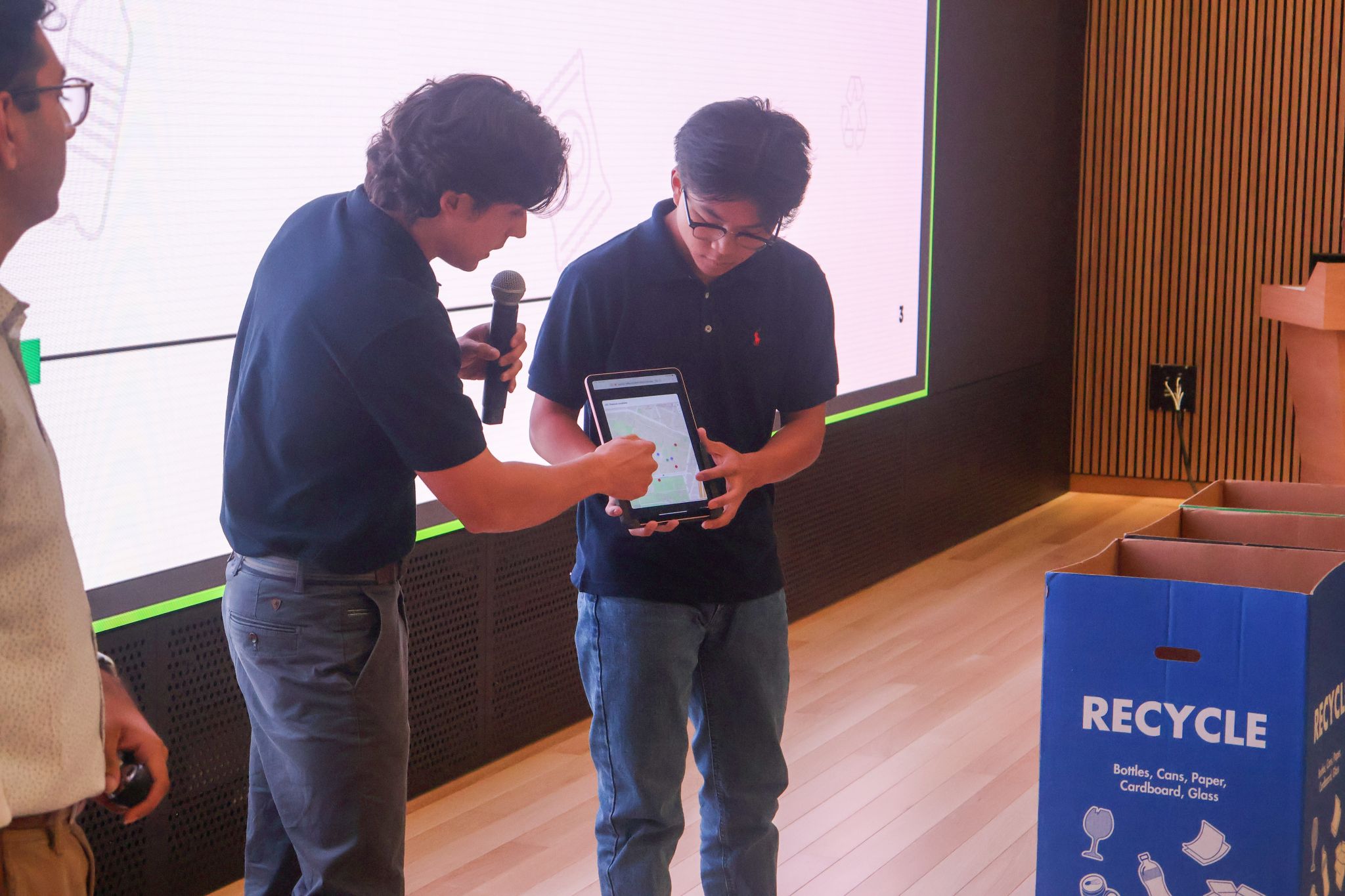
Eco Sort is a real-time waste recognition tool that uses computer vision to instantly classify items and provide disposal guidance. Place your item in front of a camera and receive immediate sorting instructions — accounting for contamination risks, prioritizing safe disposal under uncertainty, and providing location-based directions to the correct disposal site on campus. Rather than just classifying waste, we built a decision-support tool designed to reduce friction at the exact moment of disposal.
Design Process
I served as Head Designer and Product Developer. I built the platform interface and underlying logic — integrating OpenAI's computer vision API, connecting the system to a structured waste category database, and engineering real-time image recognition. A key technical decision was optimizing for accuracy over recall, ensuring hazardous materials would never be misclassified as safe recyclables. I also designed a camera-first UX to eliminate cognitive load, and integrated campus mapping so Eco Sort could direct students to the nearest correct disposal facility.
Input
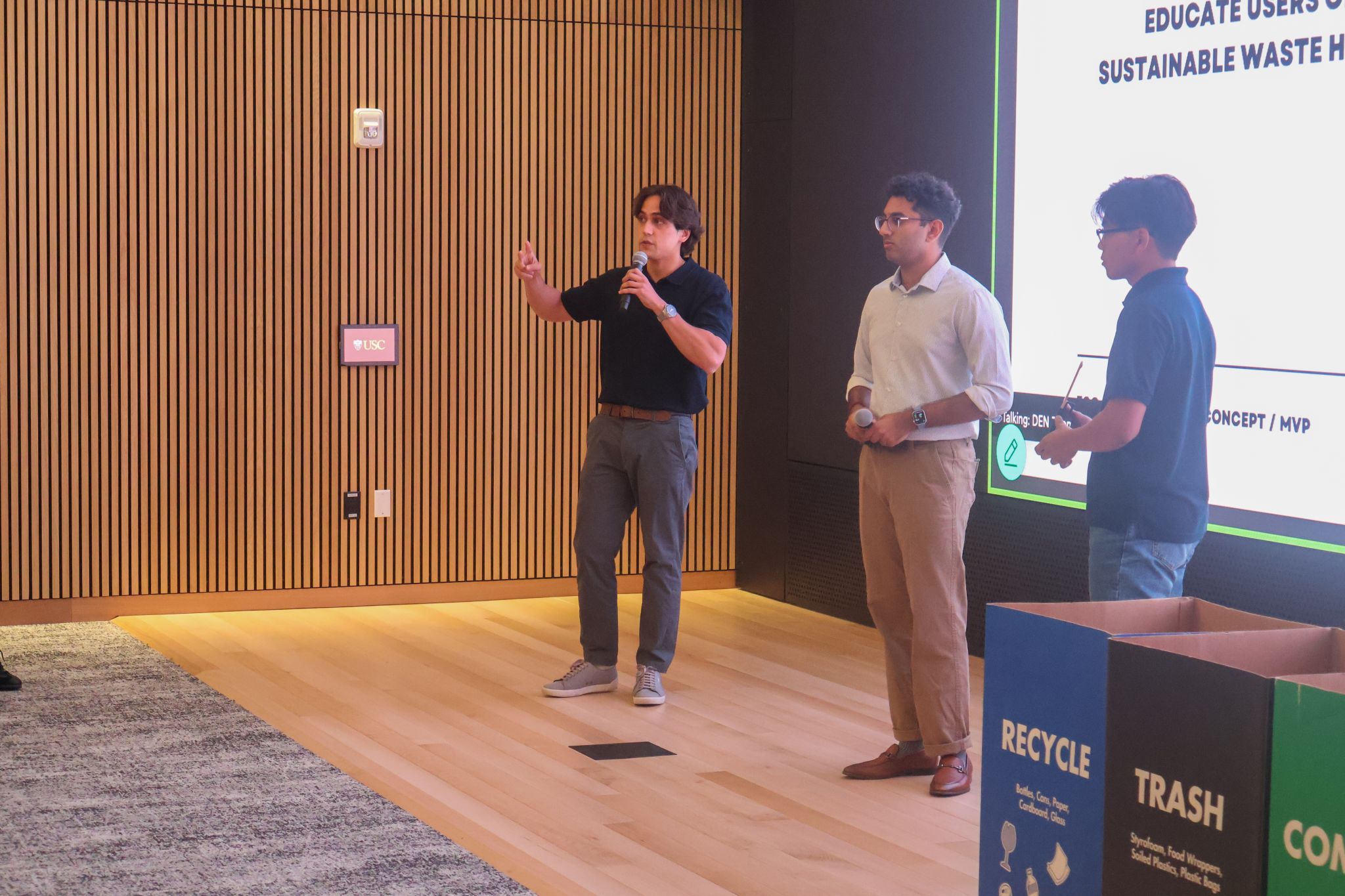
I owned product architecture, UI/UX design, API integration, and stakeholder validation end-to-end. I refined object detection thresholds, handled edge cases including food contamination and multi-material packaging, and built the location-based navigation layer. Alongside development, I led outreach to 150 students and connected with the head of USC's waste department to validate assumptions against real campus infrastructure. At the end of Origin Weekend, the team won Best Pitch Award and advanced to the Top 15 finalists.